
Our FRameworks
Practical Frameworks for Leadership and Organizational Challenges
Constellary's work is grounded in original frameworks developed by Suzan Bond. Shaped through years of working alongside leadership teams navigating real organizational challenges, these models bring clarity to the messy, hard-to-name dynamics that slow companies down. They give leaders shared language, reveal hidden patterns, and support more intentional decisions about how their companies operate and grow. Each framework offers a different lens for diagnosing what's happening and deciding where to focus next.
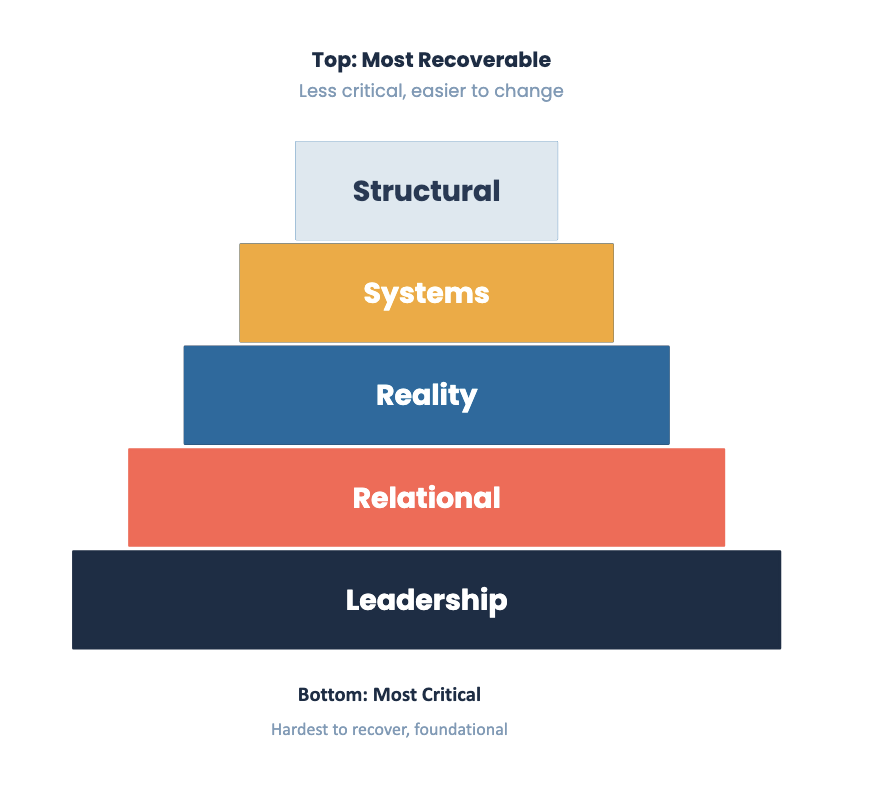
Organizational Debt Framework
A practical model for one of the most common leadership blind spots: the hidden patterns that accumulate quietly over time and slowly limit what an organization can do. Organizational debt is the hidden cost of growth. It's why your team is working hard but still stuck.
Most leadership teams don't realize how much debt they're carrying until it's compounding everything — slowing decisions, eroding trust, creating friction that no one can quite name. Constellary’s org debt framework helps leaders identify where debt has built up, understand how different types interact and reinforce each other, and figure out where to focus for the greatest impact. It's often the framework that makes everything else make sense.
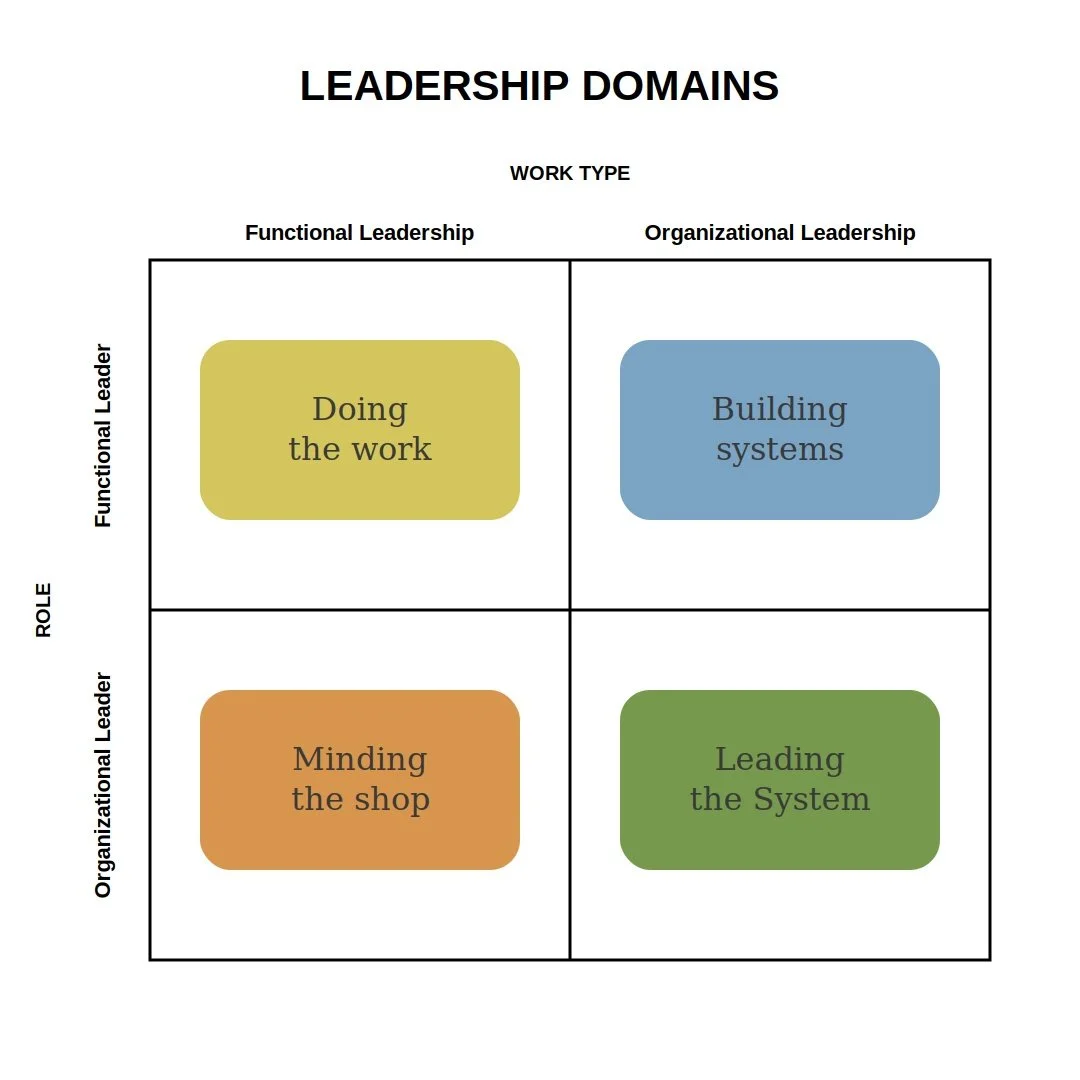
Leadership Domains: Functional vs. Organizational Leadership
Being great at running a function doesn’t automatically prepare someone to lead at the organizational level. That’s one of the most common leadership wake-up calls there is.
The job changes — a lot. Leaders who've built their credibility through deep functional expertise suddenly find themselves in a role where that expertise is only part of what's required. The real work shifts to navigating complexity across the whole system, aligning people who don't report to them, and thinking about the organization rather than just their area. This model helps leadership teams name that shift clearly, understand what's actually different about organizational leadership, and build the skills needed to operate effectively at that level — without dragging a functional mindset into every organizational decision.
Leadership Archetypes
Why do leadership teams keep running into the same friction with each other, even when everyone is capable and well-intentioned?
The answer is usually style — how different leaders are wired to get work done, build credibility, and make decisions. This model identifies six distinct leadership archetypes and the strengths and patterns each brings to a team. It starts with self-understanding but its real value is relational — helping leaders see how their style interacts with others, navigate differences without unnecessary friction, and build a shared language that makes collaboration less effortful and more effective.

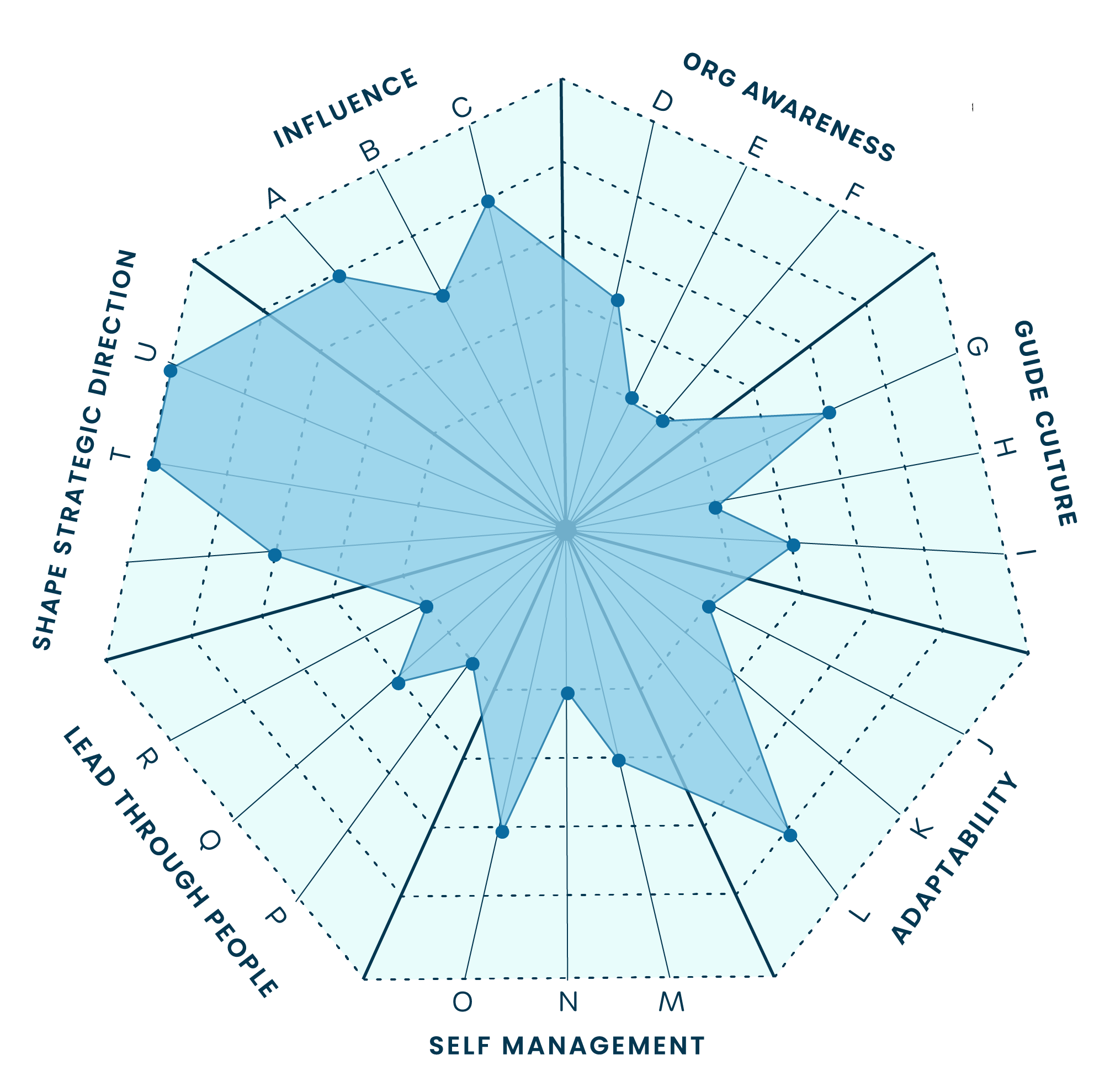
The Organizational Leader's Compass
The question many senior leaders carry but rarely say out loud: Am I actually doing a good job at this level?
Career maps tend to peter out once leaders move into director, VP, and C-suite roles, leaving them without clear guidance on what great leadership looks like now. The Compass maps the core leadership competencies needed at the organizational level across seven areas — giving leaders a concrete way to assess where they're strong, spot the gaps, and build a focused development plan. No more guessing about whether they're meeting the bar or what to work on next.
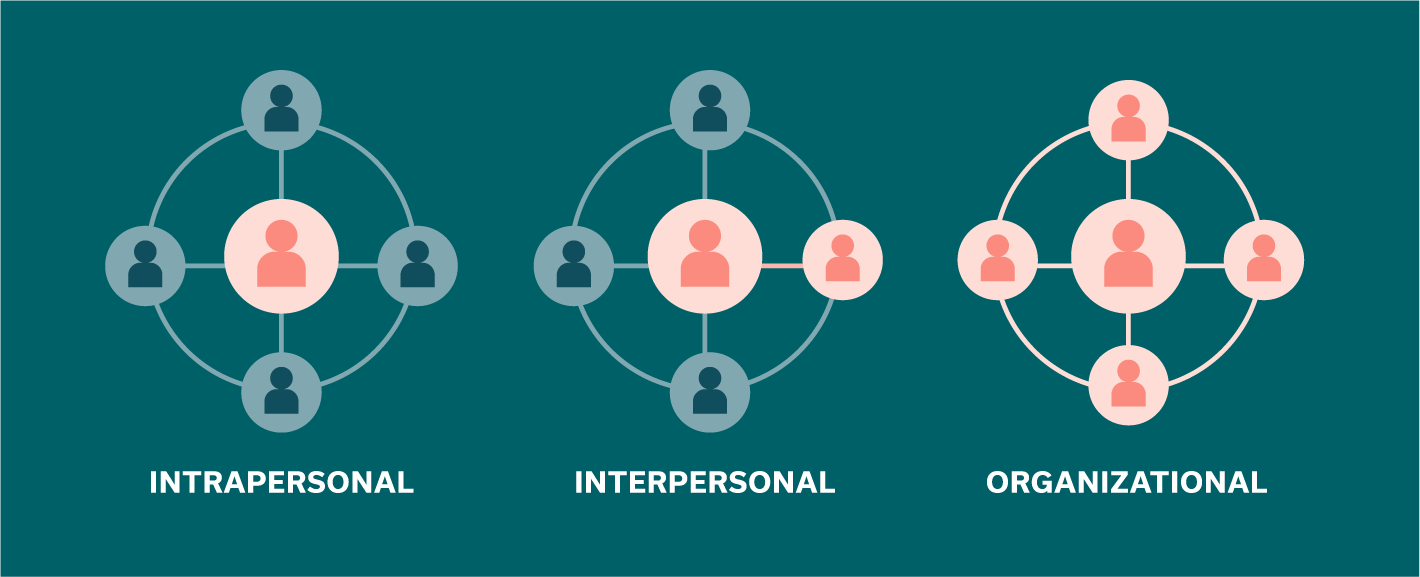
Three Relational Domains of Organizational Leadership
Organizational leadership is relational work. Most leaders know this, but few have a clear map of what that actually requires.
Leaders often get stuck over-focusing on one domain — usually the one that feels most familiar — while the real work of their role is happening somewhere else. This model maps the three relational arenas every organizational leader must navigate: intrapersonal (how we manage ourselves), interpersonal (how we work one-on-one), and organizational (how we operate in groups and systems). It helps leaders spot where they're over- or under-investing, understand the full relational demands of their role, and shift their attention to where it will make the biggest difference.
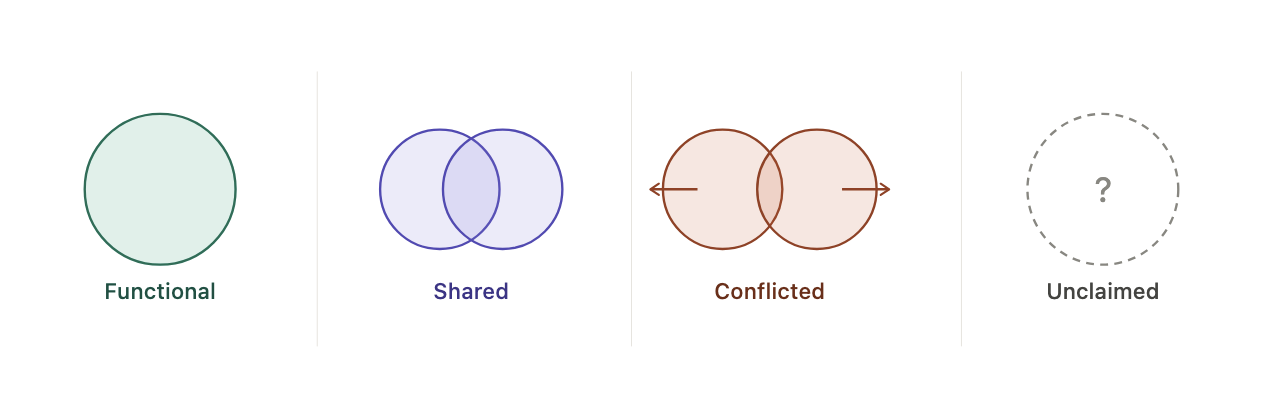
Four Territories of Organizations
A practical framework for one of the hardest parts of organizational leadership: the work that lives between functions.
Most leadership team tensions aren't just people problems — they're land problems. Leaders are constantly navigating territory that isn't clearly theirs, someone else's, or anyone's at all. This model maps four types of organizational land — functional, shared, conflicted, and unclaimed — each requiring a different approach. It helps leaders diagnose what kind of territory they're actually in, understand why friction keeps showing up in the same places, and adapt how they collaborate so cross-functional work becomes productive instead of stuck.